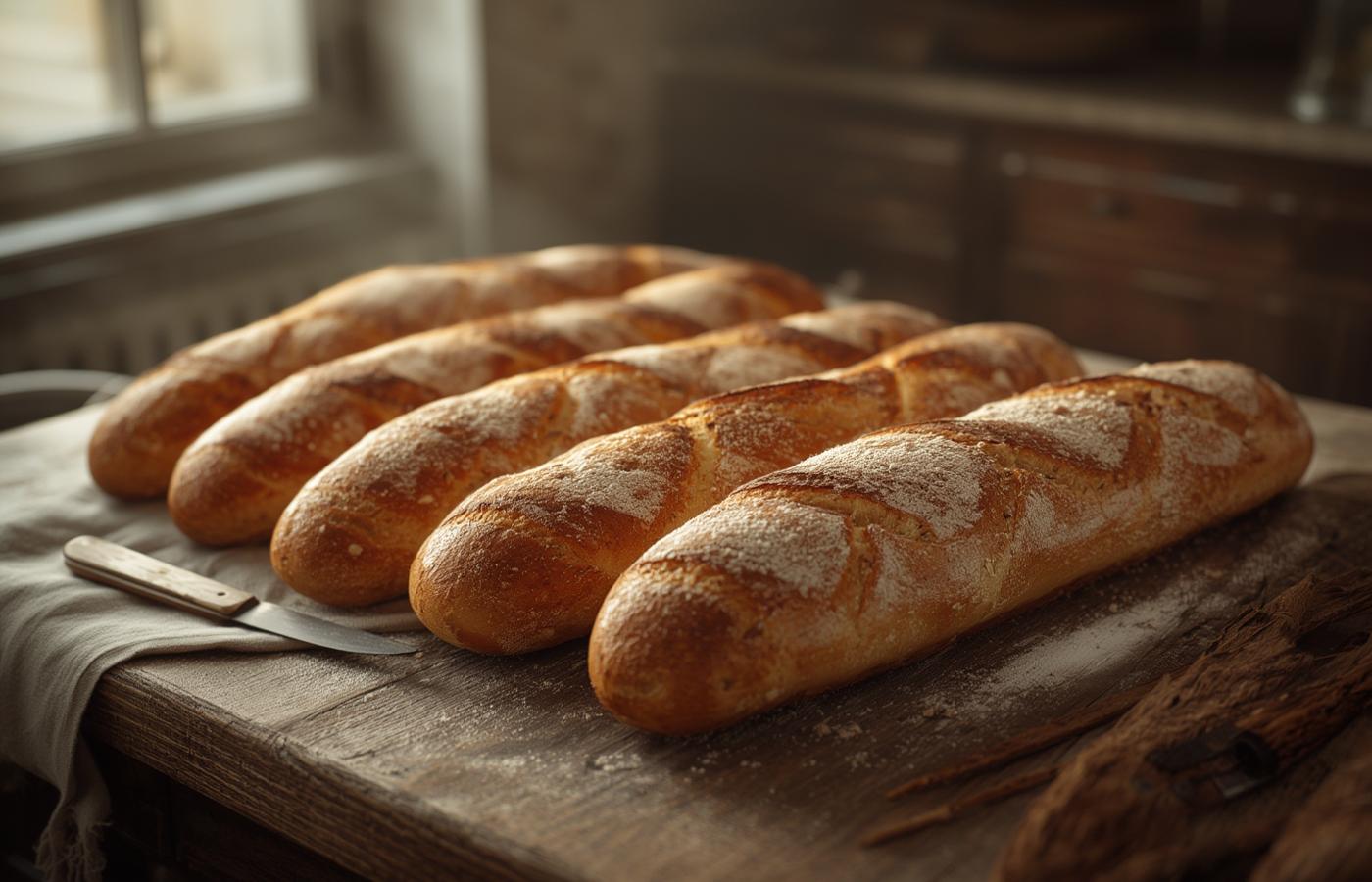
French Bread: Best Guide To Authentic Crust And Flavor
French bread is not simply a crusty baguette—it’s the careful result of technique, patience, and sensory tradition. For the home baker, chasing authentic French bread flavor means more than copying a recipe: you must adapt professional fermentation, hydration, and shaping methods to the realities of your kitchen.
Key Takeaways
- Authentic French bread contains just flour, water, salt, and minimal yeast or levain—no sugar or fat.
- Professional methods depend on precise hydration (about 68%), fermentation time, and steam for crust.
- Most home-baker frustrations stem from rushed fermentation, improper shaping, and low oven humidity.
- What makes a bread authentically “French”?
- Step-by-step pro-informed recipe for home kitchens
- Advanced analysis & pitfalls
- Conclusion
- FAQ
What makes a bread authentically “French”?
Simplicity, fermentation, and technique
There are just five permitted ingredients in official “Pain de tradition française”—flour, water, salt, yeast and/or natural levain. French bread making techniques focus not on additives, but on the transformation of flavor and texture through time, hydration, and environment. No butter, sugar, or eggs are allowed in the base recipe.
The dough is typically made with 1000g bread flour, 680g water (giving 68% hydration), 10g fresh yeast (or 5g dry yeast), and 18g salt. This higher hydration results in a more open crumb and a thin, crisp crust, characteristics deeply associated with French bread.
Where home recipes often call for all-purpose flour, extra sugar, or oil, authentic French bread relies purely on fermentation for complexity of flavor and aroma. The main differences aren’t the type of oven, but how you manage time, dough temperature, and fermentation—elements developed over generations and preserved in the best French cuisine traditions.
Professional vs home baker proportions
Professional formulas stick to their five ingredients, using less yeast (to enable a slow, flavor-building fermentation) and more water. In contrast, many home recipes add two tablespoons of fat (oil/butter), 1½–2½ teaspoons sugar, and increase the yeast to speed up the rise—shortcuts that yield soft, but less aromatic loaves. Downsides? Less flavor and a dough that stales quickly.
For home bakers eager for authenticity, the lesson is clear: reduce yeast, skip the sugar and fat, and let time and hydration do their work.
Step-by-step pro-informed recipe for home kitchens
Here’s a practical, pro-informed approach to baking French bread at home—balancing tradition and the limitations of a domestic oven.
Ingredients (for 2 baguettes or 1 large bâtard):
- 500g bread flour (type 55 if available, otherwise high-quality bread flour)
- 340g water (68% hydration; slightly warm, around 105–115°F/40–46°C for home yeast activation)
- 2.5g active dry yeast (about ¾ tsp) or 5g fresh yeast
- 9g salt (1.5 tsp, fine sea salt preferred)
- Rice flour or cornmeal (for dusting)
Process and timing:
- Autolyse: Combine flour and water. Let rest 30 minutes to hydrate flour and kick-start gluten formation.
- Mix & knead: Add yeast and salt. Mix until just combined, then knead by hand or mixer 3–5 minutes. Dough will be sticky.
- First fermentation (bulk rise): Cover and let rest at cool room temperature (20–22°C/68–72°F) for 2–3 hours, folding once at the halfway mark (fold into thirds for structure).
- Cold ferment (optional, best flavor): Refrigerate overnight, well-covered. Bring to room temp before shaping.
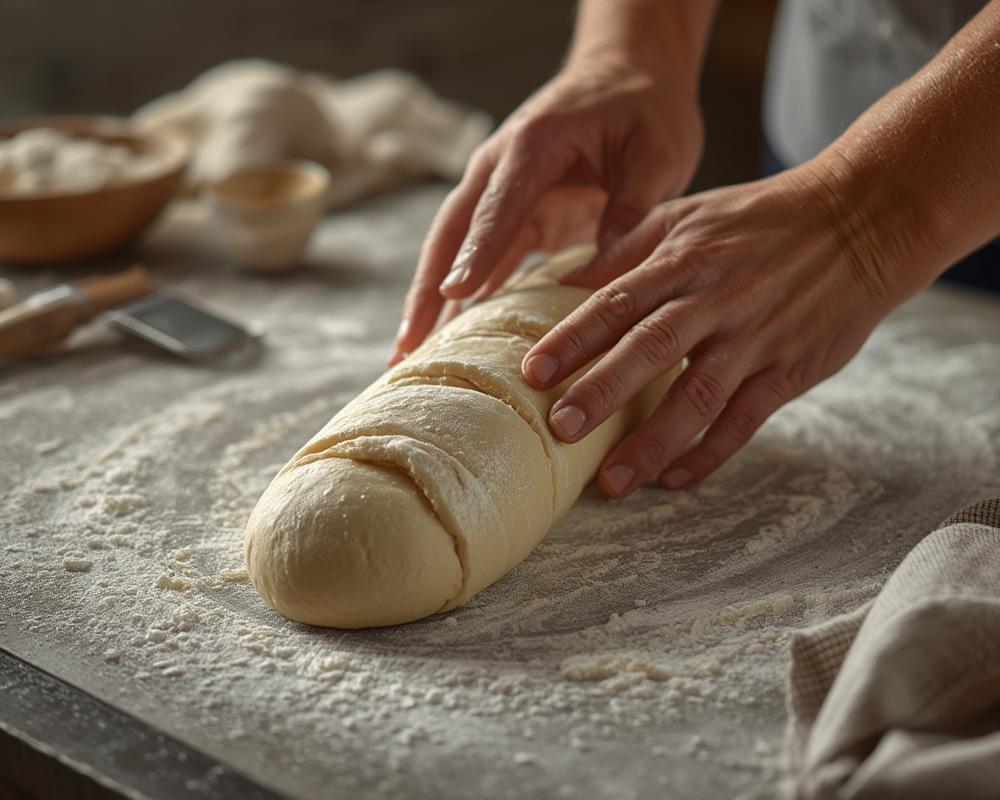
- Shape: On a lightly floured surface, divide and gently pre-shape. Rest 15 minutes, then shape into baguette or bâtard by flattening, folding sides inward, and rolling gently.
- Final rise: Place on parchment or a cloth (couche) dusted with rice flour. Cover loosely and proof 45–75 minutes, until slightly springy to the touch.
- Score: With a sharp lame or razor, make 3–4 diagonal slashes at 30° angle. This supports oven spring.
- Bake with steam: Preheat oven with a pizza stone or baking steel at 250°C/480°F for 45+ minutes. Add a metal pan with boiling water or ice cubes to generate steam at the start. Slide loaf onto stone, bake 18–24 minutes until deep golden.
- Cool: Rest 1 hour before slicing to set crumb and avoid gumminess.
Time pressed? You can shorten the process by increasing yeast to 5g and skipping the cold ferment, but the result will lack depth of flavor and crust finesse.
Advanced analysis & pitfalls
Temperature, hydration, and fermentation: what pros control
Professional bakers combine ingredient and ambient temperatures with precision, targeting a “base” dough temperature of 58°C for consistent results. They use reduced yeast (2–5g dry per kilo flour), letting overnight fermentation create subtle complexity. High hydration (68%+) encourages open crumb and glossy, chewy interiors seen in world-class baguettes.
Common home baker errors (and fast fixes)
- Too much yeast: Causes excessive rise, bland flavor, and dry crumb. Use half—or less—the yeast in standard recipes.
- Water that’s too hot or cold: Too hot kills yeast, too cold delays rise. Target 105–115°F/40–46°C for best results in home kitchens.
- Weak flour or all-purpose instead of bread flour: Produces flat loaves. Seek high-protein flour or order French T55/T65 for special occasions.
- Under-kneading: Leaves the crumb dense and heavy. Mix until springy and slightly elastic.
- Missed shaping/folding steps: Prevents structured rise and classic baguette look.
- Not enough steam or high bake temp: Causes thick, dull crust. Use an oven stone and plenty of steam (see “hacks”, above).
- Skipping or rushing fermentation: Less flavor, tight crumb, faster staling.
Specialties & underreported breads
The research only references Pain de tradition française. Other iconic French bread specialties deserve attention:
- Pain de campagne – rustic country sourdough with mixed flours
- Ficelle – slender, delicate baguette
- Pain d’épi – “sheaf of wheat” shape, festive and decorative
- Fougasse – Provençal flatbread, often accented with olives or herbs
- Gâche – sweet, egg-enriched Brittany loaf
Most high-ranking guides overlook these regional classics. Our research lacks full flavor profiles, shaping methods, and regional stories—a clear future opportunity.
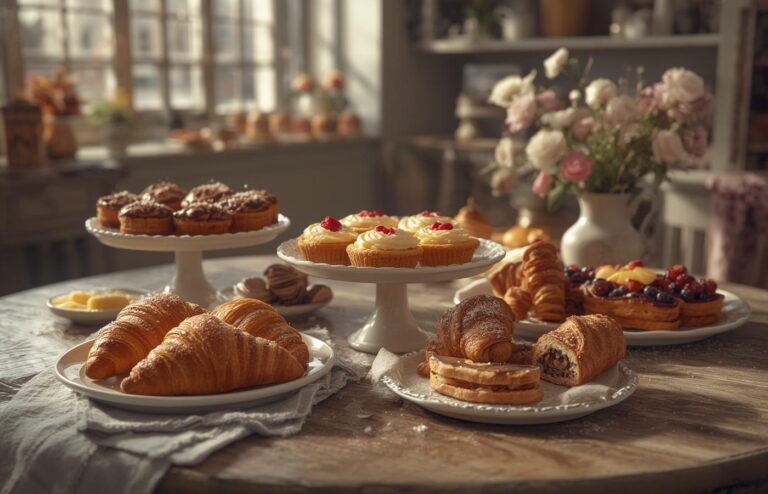
Quick guide: Croissants & viennoiserie essentials
- Use cold, plastic (but non-brittle) butter for laminating.
- Let dough relax between turns: if the layers shrink or tear, chill again for 20 minutes.
- Work quickly to keep butter and dough below 22°C (71°F) for clarity of layers.
- Don’t skip the final chill before proofing—it halts butter melt and ensures real flakiness.
- Score lightly, proof fully, and bake with a burst of steam for a burnished exterior.
Bakers looking to master croissants must focus on butter texture, timing, and a cool worktable—patience here is everything.
History snapshot—baguette and croissant origins
Research confirms: until about the early 1900s, French bread relied on natural levain only, resulting in darker, denser loaves. Mixed levain and baker’s yeast arrived later, creating the iconic light crumb of modern baguettes. More recently, most bakeries have shifted toward using entirely baker’s yeast for consistency. However, the key transitions—exact dates, social drivers, and innovation details—are missing and must be sourced directly from French baking historians and culinary archives before claiming expertise.
Costs, access, and equipment
No cost data was found for 2024. Writers should collect current prices for French flours (T55/T65), levain starters, couche cloths, lames, and stones/Dutch ovens—both in France and in major export markets. This is especially important for learners on a budget and will help illuminate whether “going authentic” is achievable or simply aspirational for the average home baker.
Real home baker pain points (to document)
Existing research found no direct quotes or testimonials. Key complaints likely include:
- Difficulty generating proper steam without a professional oven
- Dense, tight crumb instead of airy interior
- Stickiness and shaping challenges with wet doughs
- Crust too soft or thick, not crisp
- Proofing and baking schedules poorly fitting work/family life
Writers must mine Reddit, The Fresh Loaf, Instagram Reels, and baker product reviews to gather and quantify real-world frustrations for future updates.
Conclusion
The journey to real French bread at home is guided by precision and patience, not shortcut tricks. Start by refining your process: focus on simple ingredients, high hydration, slow fermentation, and creating steam during baking. Recognize the limits and risks—rushed bread lacks flavor, soft crusts result from skipped steam, and using all-purpose flour yields a weaker crumb. Home bakers willing to practice French bread making techniques reap immense, aromatic rewards from nothing but flour, water, salt, and patience. Ready to bake? Select your recipe, plan your fermentation, and enjoy exploring the flavors of French tradition.
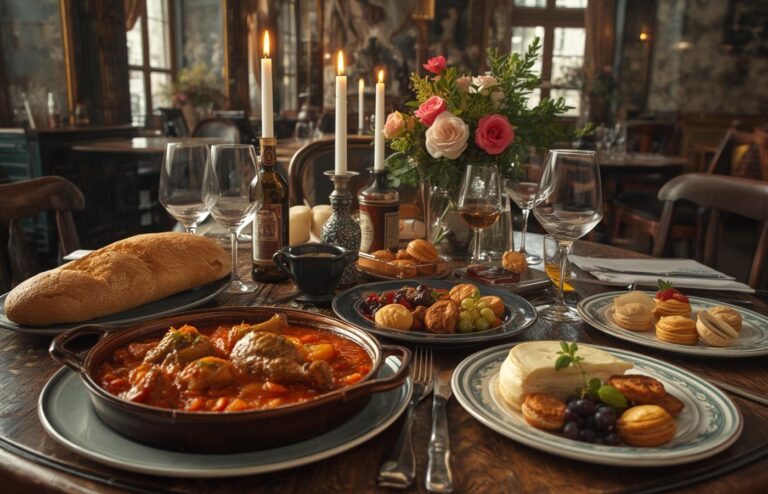
Want to deepen your understanding of how bread fits into French meals? Explore our practical guide to French cuisine for more on regional breads, pairing ideas, and culinary context.
Regional breads beyond the baguette
The baguette dominates everyday bread culture, but France’s regional bread traditions run deeper than most visitors realise. Knowing which loaf to ask for signals genuine engagement with local food culture:
- Pain de campagne — sourdough country loaf, slightly tangy, sold in rounds or batards across all regions. Long shelf life makes it ideal for picnics.
- Pain de seigle (rye bread) — dense, slightly sweet, standard accompaniment to foie gras in Périgord and Alsace.
- Couronne bordelaise — ring-shaped white loaf from Bordeaux, crisp crust, soft interior, found only in southwestern boulangeries.
- Pain brié — compact, dense and buttery from Normandy, traditionally baked for long storage by sailors.
- Fougasse — flat, slashed Provençal bread flavoured with olives, anchovies or lardons; closer to focaccia in texture.
- Bretzel — lye-glazed pretzel from Alsace, sold warm in bakeries near Strasbourg and Colmar from 7am.
Shopping tip: in France, baguettes must be baked on-site to use the designation boulangerie. Supermarket bread (even labeled baguette) is baked from frozen dough and cannot legally be sold as boulangerie produce. Look for the official Artisan Boulanger sign: it certifies that at least 70% of the bread-making happens on premises.