French Sauces: The Best Guide To Mastering Classic Techniques
French sauces form the backbone of French cuisine, from classic béchamel to delicate hollandaise. If you want to master these timeless staples, understanding their history, technique, and real-world fixes is as important as memorizing recipes. This guide gives you the practical know-how to cook, adapt, and truly taste the legacy of the French mother sauces—no matter your kitchen setup, skill level, or dietary preferences.
Key Takeaways
- The five “mother sauces” were codified by chefs Carême and Escoffier, reflecting 19th–20th century culinary trends, not ancient tradition.
- Each sauce has unique techniques—like roux or emulsification—that affect texture, flavor, and troubleshooting.
- Practical pairings, troubleshooting, and modern dietary swaps help home cooks master French sauces in today’s kitchens.
- Why the “Five Mother Sauces” are a Modern Framework
- Building Classic French Sauces: Step-by-Step Guide
- Advanced Analysis, Pitfalls, and Modern Adaptations
- Conclusion
- FAQ
Why the “Five Mother Sauces” are a Modern Framework
The idea of “mother sauces” is not an eternal French tradition. Instead, it’s a formal system shaped by two visionary chefs: Marie-Antoine Carême in 1833 and Auguste Escoffier in 1903. Carême classified the grand sauces, introducing structure and hierarchy in a time when French cooking was evolving beyond medieval spice heaps. Escoffier refined these ideas, settling on five foundational sauces: béchamel, velouté, espagnole, hollandaise, and tomat.
Why does it matter? This means French sauces are rooted in both history and adaptation. The framework is a tool, not a rule. As a home cook, knowing this allows you to experiment—whether by swapping a roux for a gluten-free alternative or adjusting acidity to modern tastes.
- French sauce origins and ingredients: French sauces evolved from lavish, spice-laden medieval blends to stock-based, butter-forward classics.
- Classic French sauces explained: The formal “five” are a 19th- and 20th-century construct and not set in stone.
Carême’s classification (1833) and Escoffier’s Le Guide Culinaire (1903) fundamentally shaped culinary education—both in France and worldwide.
Building Classic French Sauces: Step-by-Step Guide
Mastering French sauces means understanding their base ingredients, technique, and how to fix common pitfalls on the fly. Here’s your practical, step-by-step breakdown for each mother sauce, with troubleshooting, pro tips, and adaptations for every kitchen.
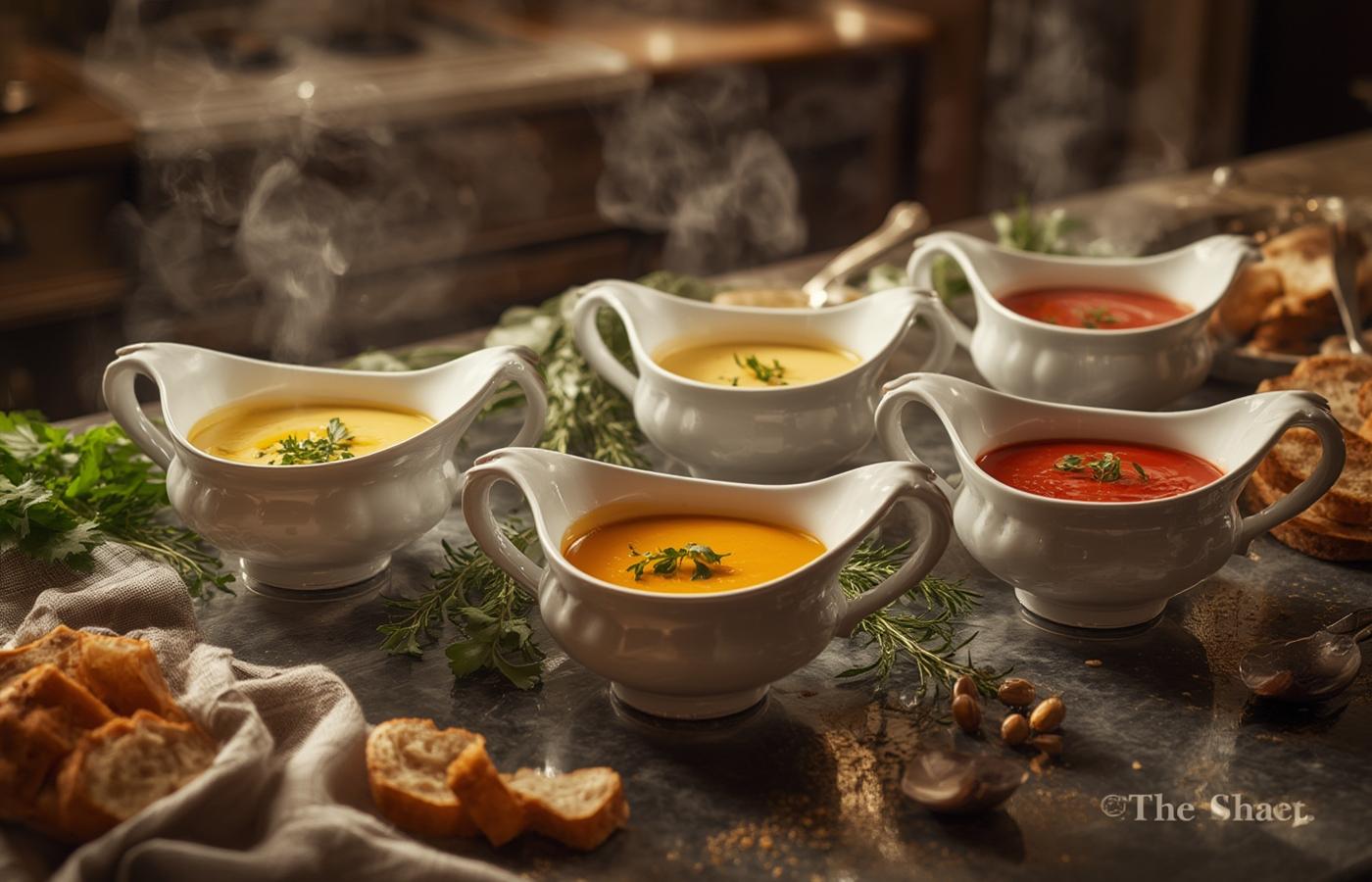
Five Essential French Sauces—Quick Definitions
- Béchamel: Smooth white sauce made from milk thickened with white roux.
- Velouté: Silky sauce of white stock (chicken, fish, or veal) thickened with light roux.
- Espagnole: Robust brown sauce from brown roux, brown stock, aromatics, tomato, and reduction.
- Hollandaise: Lemony, butter-rich sauce; emulsified egg yolk stabilized with melted clarified butter.
- Tomato (Sauce Tomat): Tomato-based sauce simmered with stock, aromatics, and sometimes pork or roux.
Daughter sauces (like Mornay, suprême, béarnaise) start with these mothers and introduce extra flavors or textures.
Mother Sauces: Classical Techniques and Core Ingredients
| Sauce | Core Ingredients | Key Technique |
|---|---|---|
| Béchamel | Butter, white flour, milk, nutmeg | White roux + slow milk infusion; simmer and whisk smooth. |
| Velouté | Butter, white flour, white stock | Blonde roux + hot stock; gentle simmer to velvety texture. |
| Espagnole | Butter, flour, brown stock, tomato, mirepoix | Brown roux + sautéed mirepoix; long reduction with tomato. |
| Hollandaise | Egg yolks, clarified butter, lemon, white wine vinegar | Gentle whisking over double boiler to form stable emulsion. |
| Tomato | Tomatoes, aromatics, stock, pork fat or butter, roux (optional) | Slow simmer and reduction for thickness and depth. |
Béchamel: Step-by-Step
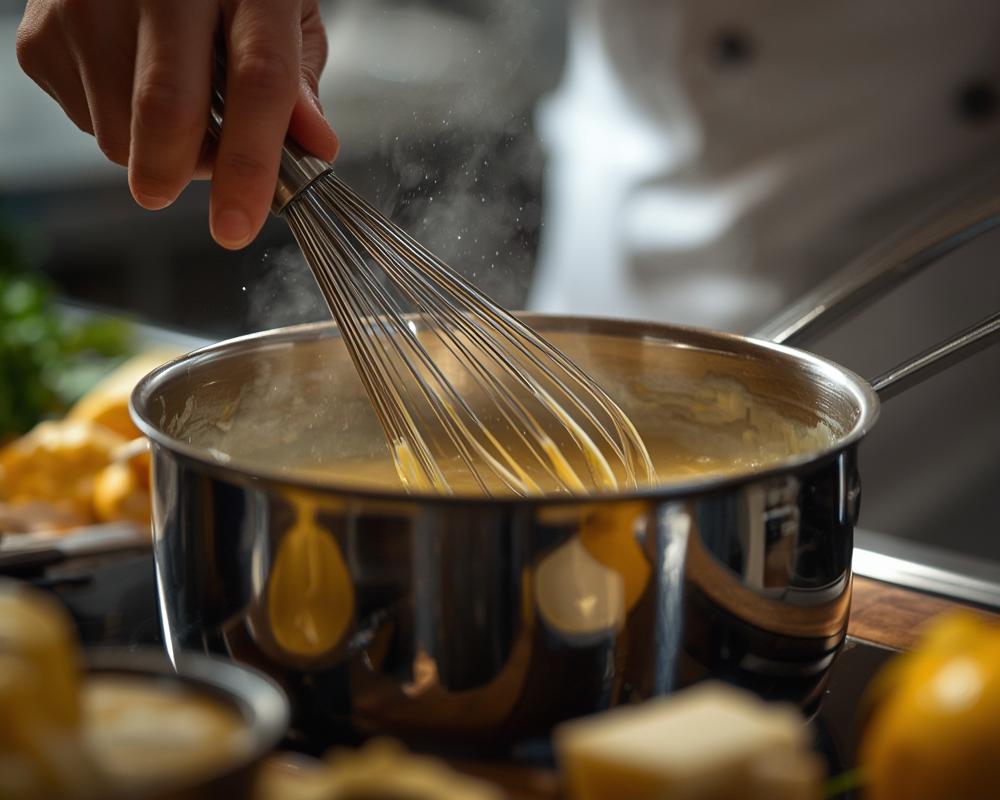
- Heat equal parts butter and flour in a saucepan, stirring constantly to make a pale roux (do not brown).
- Gradually whisk in warm milk, ensuring no lumps form—add slowly for best texture.
- Simmer gently, stirring, until thickened and silky. Season with salt, white pepper, and nutmeg.
Troubleshooting: If lumpy, whisk vigorously or strain. Too thick? Add more warm milk. Too thin? Simmer longer.
Practical Pairing and Plating Guide
- Béchamel: Gratins, lasagna, croque monsieur, vegetable bakes. Serve warm or hot, 2–3 tablespoons per portion.
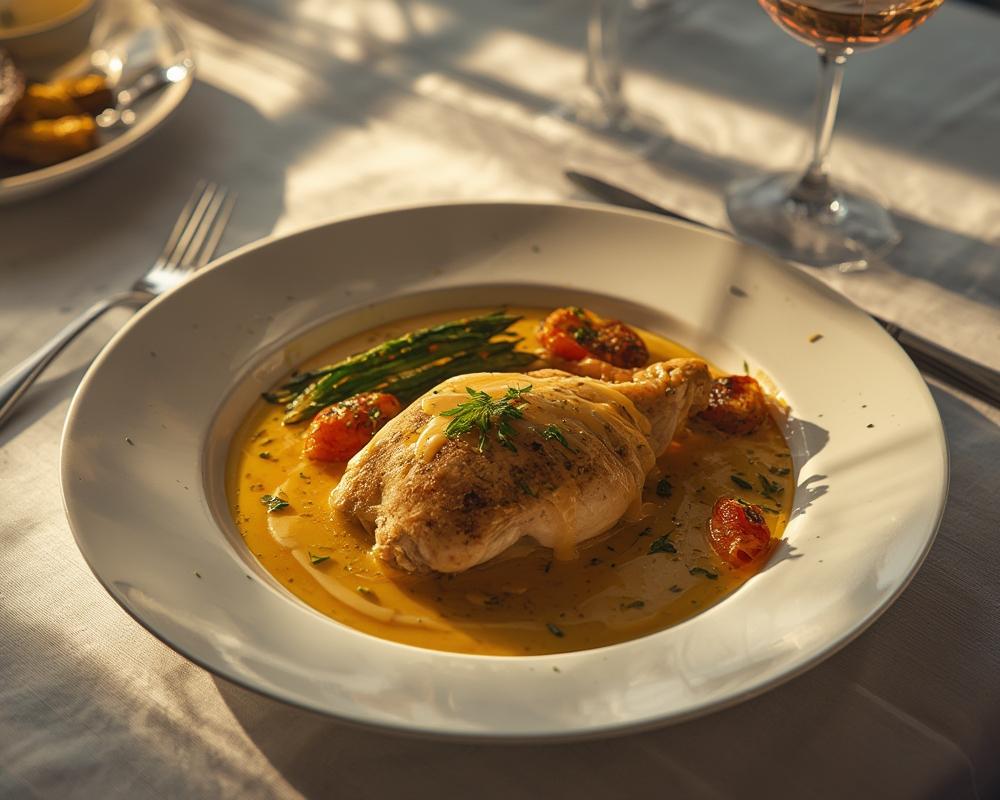
- Velouté: Roasted poultry, poached fish, creamy soup bases. Smooth over chicken or light white fish, 2 tablespoons per plate.
- Espagnole: Roasted beef, lamb, hearty vegetables; demi-glace for steak. Serve warm, typically as an accent (1–2 tablespoons).
- Hollandaise: Eggs Benedict, steamed asparagus, poached fish. Always serve just-warm. Generous spoonful per egg or vegetable stack.
- Tomato: Pasta, gnocchi, ratatouille, grilled meats. Ladle lightly (2–4 tablespoons) or plate beneath.
For a deep dive into French culinary traditions, including regional dishes and everyday recipes, explore our ultimate French cuisine guide.
Advanced Analysis, Pitfalls, and Modern Adaptations
Understanding why a sauce fails is as important as following its classic recipe. Below are the real-world stumbling blocks home cooks face, plus side-by-side solutions and dietary adaptations.
Common Problems and Home Cook Fixes
| Problem | Why It Happens | How to Fix It |
|---|---|---|
| Lumpy béchamel/velouté | Too much hot liquid at once, insufficient whisking | Strain or blend; whisk in warm liquid slowly when making |
| Broken hollandaise | Overheating, butter added too fast, poor emulsion | Whisk in warm water or egg yolk; use immersion blender for rescue |
| Grainy, oily espagnole | Over-reduction, not enough whisking | Add splash of stock and whisk or strain |
| Sour/acidic tomato sauce | Unripe tomatoes or excessive reduction | Balance with pinch of sugar, butter, or simmer further |
Modern Dietary Adaptations
- Gluten-free roux: Swap flour for cornstarch or arrowroot in béchamel, velouté, espagnole.
- Vegan hollandaise: Use aquafaba or blended silken tofu with lemon and oil instead of eggs and butter.
- Lower-fat béchamel: Opt for low-fat or plant milk and thicken with puréed cauliflower or potatoes.
- Vegetarian stocks: Use rich vegetable broths for velouté and tomato sauces.
Note: Precise calorie counts are rarely given in French references, but generally—hollandaise is richest, velouté is leanest.
Ingredient Sourcing Essentials
- Stocks: Homemade stocks give depth; if buying, choose low-sodium, high-gelatine versions.
- Butter: Choose unsalted for control; clarify for hollandaise for best emulsion consistency.
- Flour Substitutes: Cornstarch or rice flour work for gluten-free roux.
- Tomatoes: In winter, canned San Marzano tomatoes surpass lackluster fresh ones.
- Eggs: Use very fresh, room-temperature eggs for stable hollandaise.
- Equipment: Fine mesh sieve, stick blender, and double boiler are highly recommended.
If you want a primary source comparison on the evolution of French sauces from Carême to Escoffier, see this detailed sauce classification timeline.
Conclusion
Mastering French sauces is both a celebration of culinary heritage and a toolkit for modern cooks. Whether you’re whisking hollandaise for brunch or brightening roasted vegetables with velouté, the real skill lies in understanding both history and hands-on technique. Don’t be afraid to riff, adapt, or rescue—great French sauces are all about balance, patience, and confident, sensory cooking. Ready to bring the magic to your own kitchen? Start with a single sauce, and taste the tradition.
The 5 mother sauces and their key derivatives
Understanding the mother sauce system transforms sauce-making from memorisation into logical progression. Each of the five mothers generates a family of derivatives through simple additions:
- Béchamel (milk + roux): derivatives include Mornay (+ cheese), Soubise (+ onion purée) and Nantua (+ crayfish butter).
- Velouté (light stock + roux): derivatives include Suprême (+ cream + butter), Allemande (+ egg yolk + lemon) and Vin blanc (+ white wine).
- Espagnole (brown stock + mirepoix + tomato): the foundation for Demi-glace, Bordelaise (+ red wine + shallots) and Chasseur (+ mushrooms + tomato).
- Sauce tomate (tomatoes + aromatics): base for Provençale, Portuguese and American sauces.
- Hollandaise (egg yolk emulsion + clarified butter): yields Béarnaise (+ tarragon + shallots), Maltaise (+ blood orange) and Mousseline (+ whipped cream).
Mastering ratios matters more than recipes: a standard roux is equal parts butter and flour by weight. Hollandaise emulsification requires roughly 1 egg yolk per 60g clarified butter, whisked off heat at 60–65°C to avoid scrambling. These proportions hold regardless of batch size.
FAQ
What are the five French mother sauces?
Béchamel, velouté, espagnole, hollandaise, and tomato (“sauce tomat”) make up the classic five mother sauces, as defined by Escoffier in 1903.
Are these sauces gluten-free?
Béchamel, velouté, and espagnole use flour-based roux, so they are not gluten-free by default. Substitute with cornstarch or arrowroot for a gluten-free version.
Why does hollandaise sometimes break?
Hollandaise can break if overheated, butter is poured in too quickly, or the emulsion is not stable. Keep ingredients warm, whisk steadily, and add melted butter gradually.
Which sauce should I use for fish?
Velouté made with fish stock (sometimes called sauce vin blanc or suprême) is a classic match. Hollandaise also pairs beautifully with poached or steamed white fish.
How can I make béchamel vegan?
Use a plant-based butter, an unsweetened plant milk (like soy or oat), and swap the flour with a gluten-free option if needed. Flavor with a little nutmeg as usual.