Tipping in France: The Best Practical Guide To Avoid Awkwardness
Tipping in France is a travel challenge for visitors used to American, Canadian, or British habits. Understanding the French approach can help you avoid awkward moments, save money, and show respect for local etiquette.
Key Takeaways
- French law includes a 15% service fee in restaurant prices, so tipping is not mandatory and is always optional.
- Small, rounded cash tips (like €1–2 per person) are appreciated for great service, but high-percentage tips mark you as a tourist.
- Always tip in cash if you wish, since most French servers do not expect card tips and may remove card-based prompts.
- Understanding how tipping works in French culture
- Amounts and rules for tipping in different scenarios
- Choosing between cash and card for tips in France
- Tipping recommendations for taxis cafés hotels and service providers
- Typical errors travelers make with French tipping customs
- How French residents view tips and what can vary
- Legal requirements and how French tipping rules developed
- Key tipping details even seasoned travelers often miss
- At a glance tipping reference for France
- Frequently asked questions about tipping in France
Understanding how tipping works in French culture
Tipping in France is guided by a fundamental difference from the practices in the United States or elsewhere. By law, all restaurant, café, and bar menus must display prices that include a “service compris” charge—meaning the service is already paid for by the 15% fee built directly into every menu item. The French language also separates the required “service” from the optional “pourboire” (tip). Because restaurant staff receive legal minimum wages, paid time off, and social protections, tips are not tied to earnings and are left only as a genuine sign of thanks for special attention or friendliness.
French tipping etiquette makes this distinction clear: tipping is entirely optional and not the social obligation it is in some other countries. It is nearly always a small gesture—a token of gratitude, not a percentage payment. That is why, across France, you see locals leaving a few coins, not calculating double digits on every bill.
For travelers, this legal and cultural background removes any pressure to tip by default. Instead, it is about appreciation, given at your own discretion for standout service.
Explore more about french culture and etiquette
Amounts and rules for tipping in different scenarios
How much to tip in France depends on the venue and the level of service you receive. There is no fixed rule, but here are the local standards tourists can follow with confidence:
- Casual cafés and bistros: Rounding up the bill is typical—leave any loose change or about €1–2 per person if service was friendly and prompt.
- Restaurants: For attentive or exceptional service, adding a few euros extra is welcome, but not required. For most meals, a small coin tip is more than enough. In fine dining restaurants, consider leaving five to ten percent only if the staff truly stood out. A €2–€5 note fits most situations.
- Bars and snack counters: Leave 20–50 centimes per drink. For table service at a café, round up the total or leave €1 for friendly attention.
Unlike in the United States, you will rarely see French people calculating tips as a percentage of the total bill. Instead, small cash gestures—offered discreetly—are the norm. If in doubt, simply round up to the next euro and leave it as you depart.
Choosing between cash and card for tips in France
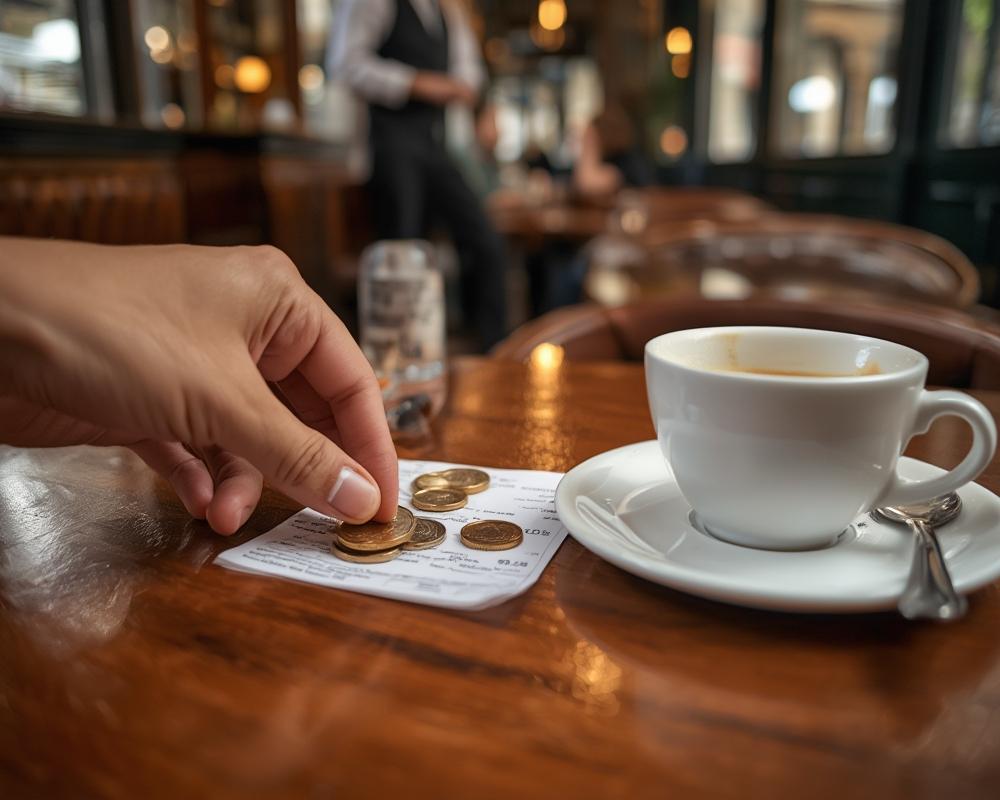
In France, almost all tips are expected in cash. French tipping etiquette is built on a direct handover of coins or small notes. Despite the rise of contactless payment, foreign travelers often encounter problems when trying to tip by card. Most credit card terminals in France do not permit, or actively block, tip additions. Servers may remove these prompts before presenting the terminal to locals—because traditionally, gratuities are never included by card.
If you want to thank your server, prepare cash before you settle your bill. This makes things straightforward and avoids awkward moments at the payment terminal. A friendly “merci” accompanied by a euro or two is both sufficient and appreciated. Cash tips go directly to the person who served you, making the gesture clear. While card-based tipping is being introduced by some touristy venues, it is still regarded with suspicion by French staff and many regular customers.
Carrying some coins ensures you can show thanks smoothly, matching what locals do wherever you travel in France.
Tipping recommendations for taxis cafés hotels and service providers
French tipping etiquette does not end at the restaurant door—it helps to know what small tokens are expected for other services:
- Taxis: Most French residents simply round up the fare. For longer rides, or if the driver helps with your bags, leaving up to 5% is customary. If a driver handles luggage, €1–2 per bag is welcome. For airport transfers and full-day tours, a tip of 5–10% is typical, especially if the driver goes above and beyond.
- Cafés and bars: For quick coffee or a drink at the counter, leave 20–50 cents or simply round up. For café table service, leave €1 if you appreciated the attention.
- Hotels and other services: There is no universal French standard for bellhops or housekeeping staff. If you wish, €1–2 per bag for luggage, and €1–2 per day for housekeeping, is generous and never expected. For hairdressers, customs vary and depend greatly on satisfaction—round up or consider a few euros for particularly attentive work.
It is worth noting that strong guidelines backed by French sources for hotel staff or hairdresser tips are lacking. Local discretion and level of service play a key role.
Typical errors travelers make with French tipping customs
First-time visitors to France often make a few predictable blunders around tipping. Here are the most common pitfalls and how to avoid them:
- Leaving 15–20% tips on restaurant bills in the American style—French staff register this as the classic “tourist move,” sometimes feeling awkward about accepting the excess.
- Confusing the mandatory “service” (already provided for in menu prices) with the optional “pourboire” (tip), leading to double tipping.
- Attempting to add gratuities directly on the credit card terminal—these prompts are routinely removed by servers and are not standard practice.
- Tipping automatically for every meal or coffee, no matter the quality of service, rather than treating the tip as a reward for a job well done.
Understanding these habits helps any visitor blend in with local customs. If a French server says “non” when asked about tipping, they are indicating it is not necessary—not that good service was absent. Avoid elaborate calculations and simply round up with coins in casual settings.
Learn more about French table manners
How French residents view tips and what can vary
The French see tipping as a personal, optional gesture, not an automatic expectation. Appreciation for great service is real, but regulars will often leave nothing for average experiences. Wealthier Parisians may tip €2 at a café, or up to €20 for truly outstanding dinners, but the same person will walk away without tipping if nothing stood out.
Across France, pushback against imported tipping customs is becoming more vocal. Many locals dislike the pressure brought by American-style card-tip prompts and optional service add-ons. France’s wage laws and “service compris” culture remain strong anchors of resistance.
There is no solid data about strong regional differences—tipping is more about urban versus rural expectations or the presence of many tourists than a North vs. South divide. In essence, French diners reward what feels earned and never tip out of obligation.
Legal requirements and how French tipping rules developed
The foundation of current French tipping customs is legal. In 1985, France passed laws guaranteeing a minimum wage (SMIC) for all employees in hospitality. This change ended the era when staff relied on gratuities for their survival and put the responsibility on employers to pay fair wages. Since then, the 15% service fee (“service compris”) has been a legal must on menus.
France’s Ministry of Economy has clarified that tips are optional and their amount is always up to the customer. No significant changes to tipping laws have been made in the past five years. This legal environment creates a simple rule for travelers: you owe nothing extra, unless you feel moved to thank someone directly.
Key tipping details even seasoned travelers often miss
Three important truths are often skipped even by well-intentioned guides:
- The service versus pourboire distinction: Service (“service compris”) is a built-in salary component. The pourboire is genuine gratitude, not a hidden wage.
- Widespread rejection of card-based tipping: Most servers actively remove tip prompts on card terminals. Cash-only remains the social norm.
- Crucial legal context: Understanding why tipping is optional stems from strict wage laws introduced in 1985. The shift ensured fair pay without relying on customer generosity.
Knowing these details helps visitors avoid confusion and sets the right expectations.

At a glance tipping reference for France
- Restaurants: 15% service always included. Add a coin or €1–2 per person for standout service.
- Cafés: 20–50 cents per drink, or round up for table service.
- Taxis: Round to the next euro or up to 5%. Luggage help: €1–2 per bag.
- Fine dining: 5–10% for truly exceptional service—not expected otherwise.
- Hotels: No strong rule, €1–2 per bag or per day is a safe gesture.
- Tours: 5–10% if pre-booked and the service exceeded expectations.