Burgundy Wine Region: Best Proven Guide To Buying And Cellaring
The Burgundy wine region stands out for its exceptional terroir and the noticeable volatility of its vintages, influencing both the style and value of its celebrated Pinot Noir and Chardonnay wines. Understanding these factors is essential for sommeliers, retailers, and collectors aiming to make informed purchasing and storage choices. This article offers a practical framework focused on terroir, classification, and vintage risks to guide strategic decisions in acquiring Burgundy wines from its key appellations.
Key Takeaways
- Yearly production in Burgundy fluctuates drastically, affecting wine style and price risk, with volumes swinging between 1.9 million and 1.2 million hectoliters recently.
- The Burgundy classification system defines scarcity and pricing through four tiers, but detailed regulatory specs vary and remain incomplete in public data.
- Comparisons across Burgundy’s major appellations reveal distinct terroir influences that buyers must weigh for vintage resilience and aging potential.
- Understanding how terroir and vintage variations influence buying choices
- Clarifying the Burgundy classification and its importance for quality and pricing
- Comparing Burgundy’s key appellations and their typical wine characteristics
- Evaluating terroir factors at Premier and Grand Cru sites and practical proxies
- Interpreting market trends and export data to guide purchase timing and valuation
- Addressing common consumer issues and best practices for provenance and storage
- Developing buying and cellar strategies considering budget and vintage risks
- Concluding strategies for navigating Burgundy wine decisions
- Frequently asked questions about the Burgundy wine region
Understanding how terroir and vintage variations influence buying choices
Burgundy’s terroir is famously diverse and subtle, with small parcels that respond sharply to microclimate and weather fluctuations. This sensitivity leads to significant year-to-year variations in production volume and wine character. For example, 2023 saw a remarkable 1.9 million hectoliters—one of the largest recent harvests—while 2024 dropped by approximately 36.5 percent to about 1.21 million hectoliters. A rebound to 1.43 million hectoliters is forecast for 2025.
Côte de Nuits appellations to know: Gevrey-Chambertin (9 Grands Crus,
including Chambertin and Chambertin-Clos de Bèze); Morey-Saint-Denis; Chambolle-Musigny;
Vougeot (Clos de Vougeot, 50 ha Grand Cru with over 80 owners);
Vosne-Romanée (home to Romanée-Conti, La Tâche, Richebourg, Romanée-Saint-Vivant).
Côte de Beaune appellations to know: Corton (the Côte de Beaune’s only
red Grand Cru); Meursault (no Grand Cru, but legendary Premiers Crus Perrières and
Charmes); Puligny-Montrachet and Chassagne-Montrachet (share the Montrachet Grand Cru,
0.8 ha, considered the world’s greatest dry white wine site).
Côte de Nuits appellations to know: Gevrey-Chambertin (9 Grands Crus,
including Chambertin and Chambertin-Clos de Bèze); Morey-Saint-Denis; Chambolle-Musigny;
Vougeot (Clos de Vougeot, 50 ha Grand Cru with over 80 owners);
Vosne-Romanée (home to Romanée-Conti, La Tâche, Richebourg, Romanée-Saint-Vivant).
Côte de Beaune appellations to know: Corton (the Côte de Beaune’s only
red Grand Cru); Meursault (no Grand Cru, but legendary Premiers Crus Perrières and
Charmes); Puligny-Montrachet and Chassagne-Montrachet (share the Montrachet Grand Cru,
0.8 ha, considered the world’s greatest dry white wine site).
These swings affect fruit concentration, acidity, and tannin profiles, thereby influencing the aging potential and market prices of Burgundy Pinot Noir and Chardonnay. Buyers need to interpret volume and weather impact alongside terroir nuances to manage risk and opportunity effectively.
Clarifying the Burgundy classification and its importance for quality and pricing
The Burgundy wine classification follows a four-step hierarchy governing labeling, production rules, and scarcity-driven valuation. At the base lies the regional level, followed by village appellations, then Premier Cru vineyards, and finally the celebrated Grand Cru sites. Each ascending tier generally signals stricter production controls and higher perceived quality, which command premium pricing.
Unfortunately, detailed regulatory limits such as maximum yields, minimum alcohol potential, and planting densities at the appellation level are not fully available in current public datasets. Nonetheless, the hierarchy remains critical for understanding the market and wine identity.
Comparing Burgundy’s key appellations and their typical wine characteristics
Burgundy divides mainly into four prominent zones, each with distinct soils and wine styles that affect buying decisions. The Côte d’Or is renowned for intense, age-worthy Pinot Noir and structured Chardonnays. Chablis produces distinctly mineral-driven and high-acid Chardonnays. The Côte Chalonnaise offers value-driven wines with accessible fruit profiles, while the Mâconnais is recognized for generous, ripe Chardonnay styles.
In 2023, Chardonnay dominated white production with about 1.122 million hectoliters compared to 518,846 hectoliters of red, underscoring white wine’s predominance across these zones. Notably, the Mâconnais contributed roughly 34 percent to white wine production when including Premier Cru sites, emphasizing its role in Chardonnay supply.
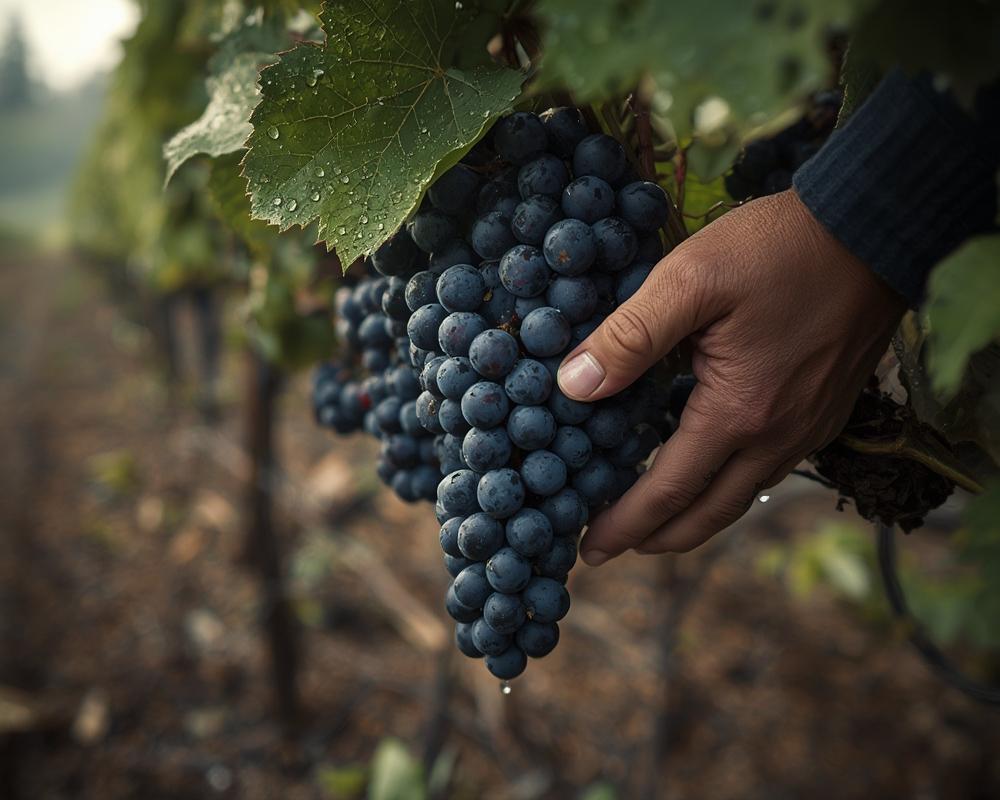
Within this complex terroir, a Pinot Noir from Burgundy shows marked differences by zone, with variations in tannin structure and aromatic profiles driven by slope, elevation, and soil type. Similarly, Chardonnay from Burgundy ranges from crisp and mineral-laden in Chablis to richer and fruit-forward in Mâconnais and Côte Chalonnaise.
This comprehensive guide to wine regions of France provides a broader context that complements specific Burgundy insights and supports travel or trade decisions.
Evaluating terroir factors at Premier and Grand Cru sites and practical proxies
Terroir evaluation at the Premier and Grand Cru level involves understanding multiple factors such as soil composition, slope, elevation, and microclimate. Although precise numeric data like soil pH, vineyard-specific temperature series, and rainfall remain unavailable, the interplay of these components strongly influences wine attributes and vintage expression.
The large production differences between vintages, such as 2023’s abundance versus 2024’s contraction, illustrate the important role of mesoclimates. Since comprehensive scientific terroir datasets are limited, buyers often rely on recognized vineyard reputations, slope orientation, and historical vintage quality to infer wine potential.
Interpreting market trends and export data to guide purchase timing and valuation
Burgundy’s market demonstrates robust export growth, with volume and revenue increasing by nearly 9 percent in 2024 despite smaller harvests. Crémant de Bourgogne notably crossed a threshold in 2025 by exporting over half of its 231,000 hectoliter production. These dynamics indicate growing international demand and rising scarcity, factors that intensify price pressure especially on premium classifications.
While no unified “total market value” figure exists, these trends suggest buyers should consider timing purchases early in favorable vintages and focus on classifications likely to retain or increase liquidity. Recent export data for Crémant de Bourgogne exports highlights shifting patterns important for trade and collecting strategies.
Addressing common consumer issues and best practices for provenance and storage
Collectors and buyers regularly face challenges due to Burgundy’s limited production and fragmented vineyard ownership. Provenance uncertainties, vintage mismatches, and price-to-quality concerns often arise. Moreover, the small-lot nature of Burgundy means storage conditions and authenticity verification are critical to preserving wine value.
Where to Visit: Burgundy Estates and Tasting Prices (2025–2026)
The Route des Grands Crus runs approximately 60 km from
Dijon to Santenay, crossing the Côte de Nuits (Pinot Noir) then the Côte de
Beaune (Chardonnay). Allow 2–3 days to cover it with estate stops; book 2–4 weeks in
advance during high season (July–October).
Key villages along the route: Gevrey-Chambertin, Vougeot,
Vosne-Romanée, Nuits-Saint-Georges, Pommard, Volnay, Meursault, Puligny-Montrachet.
Meursault and Puligny-Montrachet produce the benchmark white Burgundies — pure Chardonnay
from clay-limestone terroir (Winalist 2026).
Specific estates with verified pricing:
- Domaine Chanson (Beaune) — cellar visit and tasting:
€40 per person for 1h30; tasting of 6 wines only:
€25 per person for 45 minutes (domaine-chanson.com). - Maison Joseph Drouhin (Beaune) — tasting without tour:
~€22; tasting with cellar tour: ~€38
(beaune-tourisme.fr/bourgogne-evasion.fr). - Domaine de la Romanée-Conti (DRC) — no public tasting room;
access limited to importers and trade journalists. However, the DRC plot in
Vosne-Romanée is freely accessible: a stone cross marks the parcel — a pilgrimage
point for wine enthusiasts who do not need an appointment.
Price benchmarks for tastings: standard village and premier cru
guided visits €13–€40; grand cru tasting experiences
€80–€200; private premium tastings at top domaines
€400+. The average across all Burgundy tasting experiences is
approximately €162/person (Winalist 2026).
Bottle prices at the cellar door (typically 10–20% below retail):
village Bourgogne Rouge/Blanc €15–€35; Premier Cru
€40–€100; Grand Cru from €150
(bourgogne-evasion.fr 2026).
Where to Visit: Burgundy Estates and Tasting Prices (2025–2026)
The Route des Grands Crus runs approximately 60 km from
Dijon to Santenay, crossing the Côte de Nuits (Pinot Noir) then the Côte de
Beaune (Chardonnay). Allow 2–3 days to cover it with estate stops; book 2–4 weeks in
advance during high season (July–October).
Key villages along the route: Gevrey-Chambertin, Vougeot,
Vosne-Romanée, Nuits-Saint-Georges, Pommard, Volnay, Meursault, Puligny-Montrachet.
Meursault and Puligny-Montrachet produce the benchmark white Burgundies — pure Chardonnay
from clay-limestone terroir (Winalist 2026).
Specific estates with verified pricing:
- Domaine Chanson (Beaune) — cellar visit and tasting:
€40 per person for 1h30; tasting of 6 wines only:
€25 per person for 45 minutes (domaine-chanson.com). - Maison Joseph Drouhin (Beaune) — tasting without tour:
~€22; tasting with cellar tour: ~€38
(beaune-tourisme.fr/bourgogne-evasion.fr). - Domaine de la Romanée-Conti (DRC) — no public tasting room;
access limited to importers and trade journalists. However, the DRC plot in
Vosne-Romanée is freely accessible: a stone cross marks the parcel — a pilgrimage
point for wine enthusiasts who do not need an appointment.
Price benchmarks for tastings: standard village and premier cru
guided visits €13–€40; grand cru tasting experiences
€80–€200; private premium tastings at top domaines
€400+. The average across all Burgundy tasting experiences is
approximately €162/person (Winalist 2026).
Bottle prices at the cellar door (typically 10–20% below retail):
village Bourgogne Rouge/Blanc €15–€35; Premier Cru
€40–€100; Grand Cru from €150
(bourgogne-evasion.fr 2026).
Developing a rigorous provenance checklist, prioritizing trusted retailers, and investing in proper cellar conditions tailored to Burgundy Pinot Noir and Chardonnay help reduce risks. Although direct consumer complaints and tasting-panel data are scarce, market patterns suggest these precautions are vital for serious buyers.
Developing buying and cellar strategies considering budget and vintage risks
Creating a practical buying framework involves aligning appellation selection, classification level, and vintage risk with the buyer’s budget and intended use. For short-term consumption, village-level wines from abundant vintages like 2023 offer approachable quality. Medium-term cellaring favors select Premier Cru wines with proven aging capacity, while long-term investment requires Grand Cru selections from stable vintages, supplemented by strong provenance verification.
Understanding vintage volatility is crucial. The sharp decline from 2023’s high yield to 2024’s low underscores vintage risk that must be factored into storage duration and investment planning. Auction channels or direct estate sales become essential when purchasing for long-term holdings to ensure authenticity and maturity optimization.
Concluding strategies for navigating Burgundy wine decisions
Mastering purchases within the Burgundy wine region requires insight into its volatile vintage cycles, nuanced classifications, and discrete terroir influences. Prioritizing these factors along with understanding market trends, provenance risks, and tailored cellar plans empowers professionals and serious enthusiasts to make confident, data-informed decisions. A strategic approach aligned to these criteria maximizes both enjoyment and investment in Burgundy’s celebrated Pinot Noir and Chardonnay.
Frequently asked questions about the Burgundy wine region
What causes the large vintage variability in Burgundy production volumes?
Burgundy’s variable year-to-year production primarily results from its sensitive microclimates and weather conditions including frost, rainfall, and temperature fluctuations during the growing season. This leads to wide swings in harvest size and grape quality annually.
How do Burgundy’s classification levels affect wine prices and availability?
The four-tier classification, from regional to Grand Cru, indicates increasing scarcity and quality expectations. Higher classification usually means more stringent regulations and limited production, driving higher prices and lower availability particularly at Premier and Grand Cru levels.
Which appellations in Burgundy are best suited for aging Pinot Noir and Chardonnay?
Côte d’Or appellations generally offer the most age-worthy Pinot Noir and Chardonnay due to their terroir and winemaking traditions. Chablis excels in Chardonnay with high acidity ideal for aging, while Mâconnais and Côte Chalonnaise provide earlier-drinking options with less long-term complexity.
What common pitfalls should buyers watch for with Burgundy wines?
Buyers should be wary of provenance authenticity, vintage mismatches, improper storage, and overpaying for quality inconsistent with the vintage or classification. Thorough verification and purchasing from reputable sources mitigate these risks.
Where can I find detailed terroir information for Burgundy’s Premier and Grand Cru vineyards?
Currently, comprehensive numeric terroir datasets are limited in public sources. Buyers rely on established producer reputations, vineyard orientation, soil research summaries, and vintage reviews as practical proxies for terroir understanding.